Contents of Analysis
I. Beyond the Antagonist: The N109 Origins
The introduction of Sylus in the later chapters of Love and Deepspace was not merely an addition to the roster; it was a deliberate demolition of the "gentle suitor" archetype. In a city like Linkon, where Xavier provides silent guardianship and Zayne offers clinical stability, Sylus represents the chaotic entropy of the N109 Zone. This is a lawless wasteland where Evol energy isn't just a gift—it's a currency of survival.
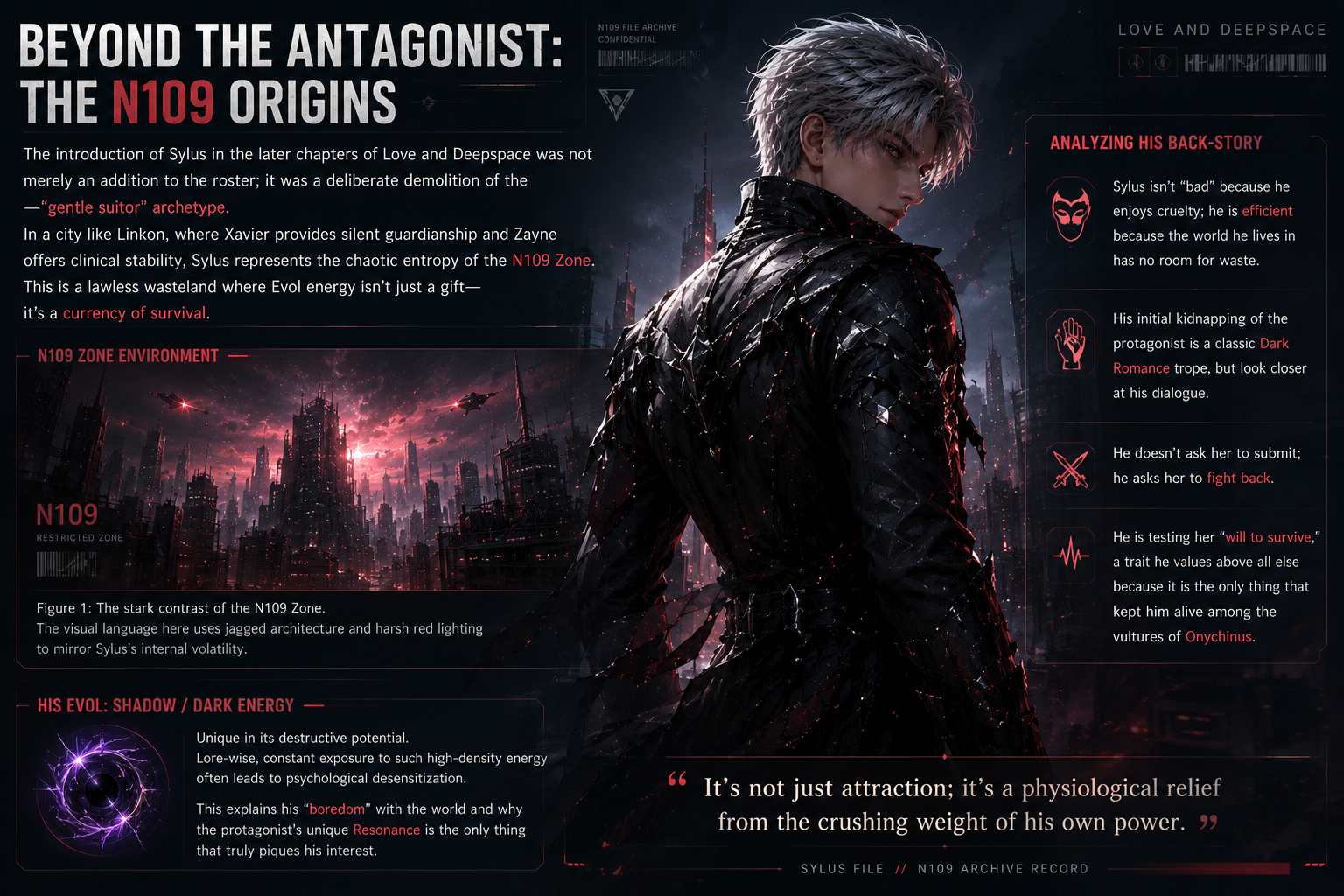
Figure 1: The stark contrast of the N109 Zone. The visual language here uses jagged architecture and harsh red lighting to mirror Sylus's internal volatility.
Analyzing his back-story involves looking at the scars he carries. Sylus isn't "bad" because he enjoys cruelty; he is efficient because the world he lives in has no room for waste. His initial kidnapping of the protagonist is a classic Dark Romance trope, but look closer at his dialogue. He doesn't ask her to submit; he asks her to fight back. He is testing her "will to survive," a trait he values above all else because it is the only thing that kept him alive among the vultures of Onychinus.
His Evol—Shadow/Dark energy—is unique in its destructive potential. Lore-wise, constant exposure to such high-density energy often leads to psychological desensitization. This explains his "boredom" with the world and why the protagonist's unique Resonance is the only thing that truly piques his interest. It's not just attraction; it's a physiological relief from the crushing weight of his own power.
II. Predator or Protector: Decoding the Interaction Triggers
The most fascinating aspect of Sylus for the player base is the "Destiny Cafe" and home interaction system. Unlike the other male leads, Sylus operates on a High-Intensity Reciprocity model. When a player touches him, his responses are rarely submissive or shy. Instead, he challenges the player’s intent.
Case Study: The "Arm Crossing" vs. "Leaning In"
At Affinity levels 1-20, Sylus maintains a defensive posture. His arms are crossed, a psychological barrier. His lines are mocking: "Are you trying to find a weakness? Good luck."
However, by Affinity level 55+, his idle animations change. He leans into the player’s personal space, exposing his neck and chest—vulnerable areas in combat terms. This signifies that he no longer views the protagonist as a threat or a tool, but as his "Safe Zone."
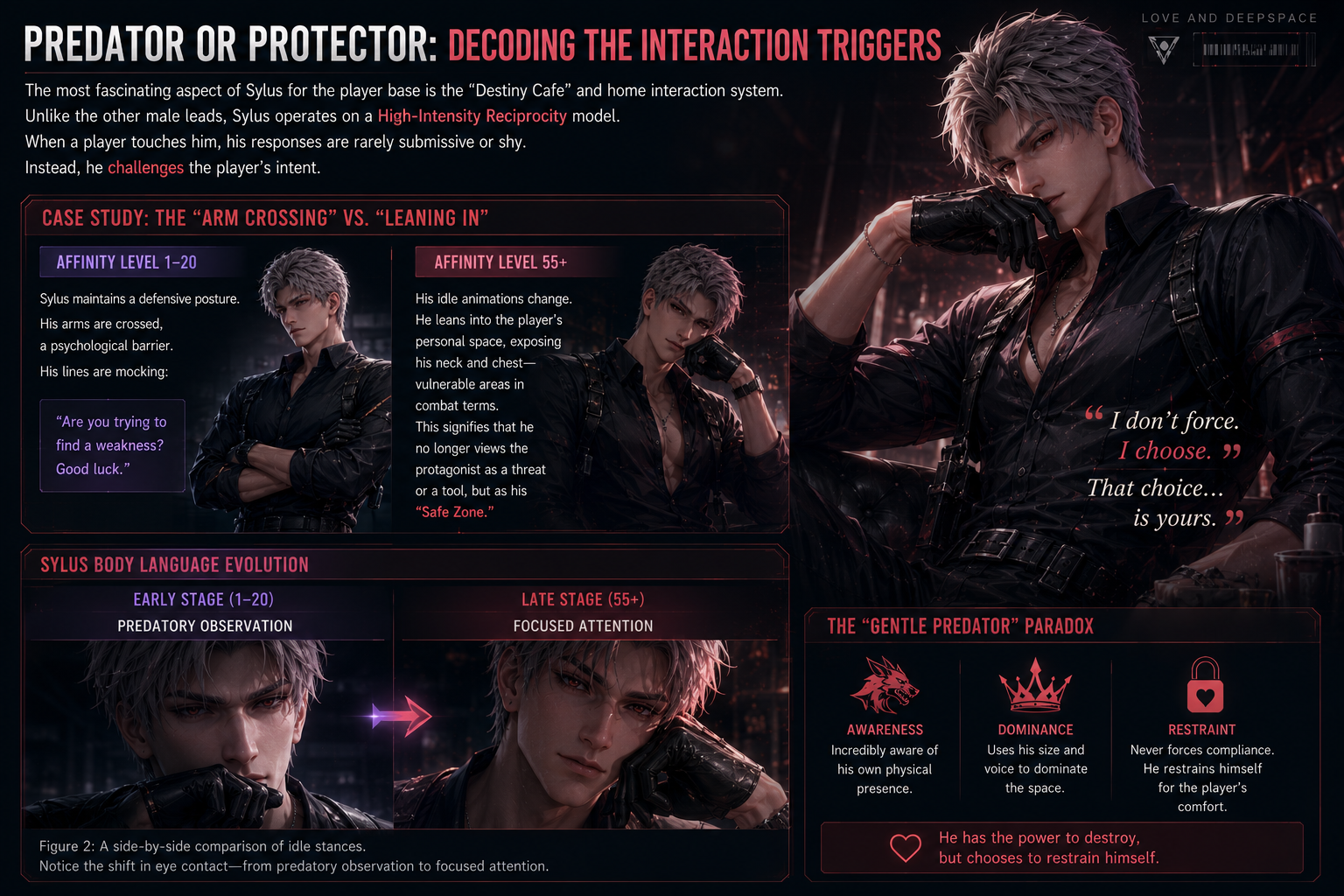
Figure 2: A side-by-side comparison of idle stances. Notice the shift in eye contact—from predatory observation to focused attention.
Furthermore, his secret lines triggered by specific touches (like his tie or the holster) reveal a man who is incredibly aware of his own physical presence. He uses his size and voice to dominate the space, yet he never actually forces compliance. This is the "Gentle Predator" paradox: he has the power to destroy, but chooses to restrain himself for the player's comfort, which is his most profound form of affection.
III. The Symbolism of Mephisto and the Obsidian Eye
No analysis of Sylus is complete without discussing his mechanical companion, Mephisto. In Western folklore, Mephistopheles is a demon from the Faustian legend who collects souls. By naming his crow Mephisto, Sylus is acknowledging his own "deal with the devil"—the sacrifice he made to gain control of N109.
The Obsidian Eye motif found in his jewelry and his Evol effects represents "The Void." In Jungian psychology, the shadow is the part of the psyche that we keep hidden. Sylus is the shadow. He doesn't hide his flaws; he wears them as armor. The red glow of his eyes during high-intensity combat indicates the "overclocking" of his Evol, suggesting that every time he protects the protagonist, he is physically burning his own life force.

Figure 3: Detailed view of the Onychinus insignia and Sylus's custom accessories. Each chain link represents a 'bond'—either one he broke or one he now honors.
IV. Power Dynamics: Why the "Enemy-to-Lover" Trope Works
Why has Sylus overtaken the popularity of more "wholesome" characters in the US market? The answer lies in the Agency of the protagonist. In her relationship with Sylus, the MC is forced to grow. She cannot be a damsel when facing the leader of Onychinus. This creates a "Power Couple" dynamic where both parties are equally dangerous.
Sylus’s popularity also stems from his Emotional Honesty. He doesn't speak in riddles like Rafayel or keep secrets like Xavier. He is brutally honest about his intentions. In a world of digital facades, American players find his "what you see is what you get" attitude refreshing, even if "what you get" is a dangerous mob boss.
The "Sinner" Mythos
His specific card "No Restrained Love" and others emphasize the theme of 'Sins.' By embracing the role of the sinner, he frees the player from the burden of being "perfect." With Sylus, the player is allowed to be messy, aggressive, and passionate. It is a liberating form of romance that breaks the traditional otome mold.
Final Verdict: The Protector in the Dark
Ultimately, Sylus is the Protector who doesn't use a shield, but a sword. He doesn't stand in front of you; he stands beside you, watching you take down your own enemies while he handles the ones in the shadows. He is the personification of the N109 Zone's only rule: Trust no one, except the one who has seen your darkest side and didn't look away.